
Industrial equipment rarely fails without warning. Changes in vibration, temperature, noise, lubrication condition, or electrical performance may appear before a machine stops working. Predictive maintenance helps maintenance teams recognize these signals and plan action before a developing fault becomes an expensive breakdown.
For manufacturers, utilities, infrastructure operators, and other industrial facilities, unplanned downtime can interrupt production, delay delivery, increase repair costs, and create safety risks. A structured predictive maintenance program supports decisions based on actual equipment condition rather than relying only on fixed schedules or waiting for failure.
What Is Predictive Maintenance?
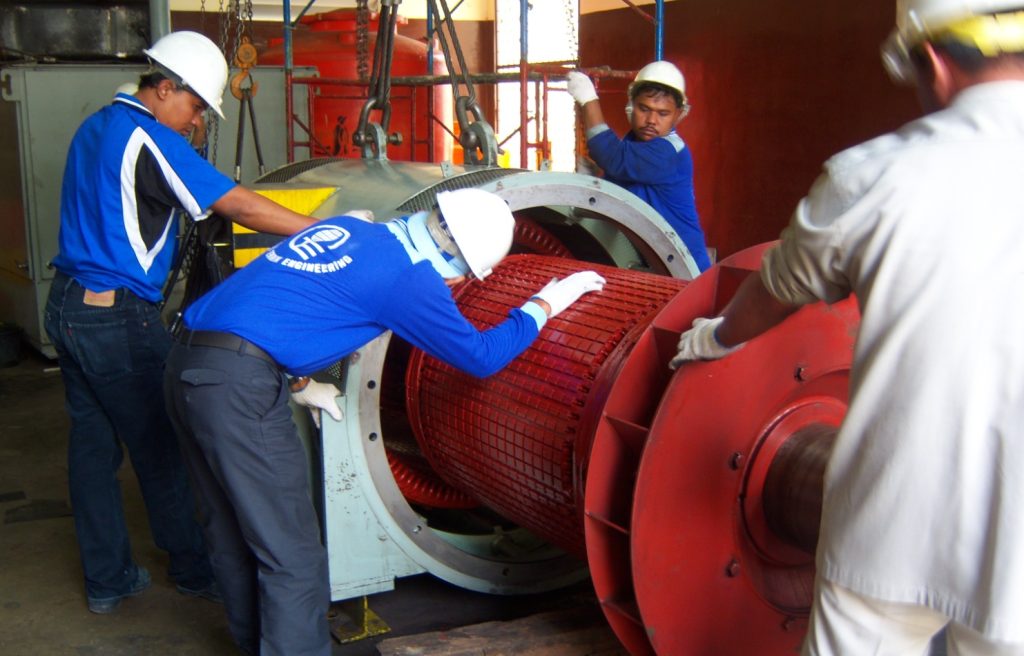
Predictive maintenance is a strategy that uses condition-monitoring data, inspections, and analysis to estimate when equipment may need maintenance. Teams monitor indicators of deterioration and schedule intervention when evidence shows that equipment condition is changing.
Depending on the asset, indicators may include vibration, bearing temperature, electrical current, insulation condition, oil contamination, pressure, flow, speed, or operating efficiency. Measurements are compared with equipment history, manufacturer recommendations, and suitable operating limits. A developing abnormal trend can trigger further diagnosis, repair planning, or a controlled shutdown.
Predictive maintenance cannot forecast every failure with certainty. Its value is that it reduces uncertainty and gives maintenance teams better information about equipment condition and intervention priorities.
Why Predictive Maintenance Matters in Industry
Reduce unplanned downtime
Early detection gives teams time to arrange parts, technicians, tools, and production windows. This can turn an emergency repair into a planned maintenance activity and reduce disruption to connected production processes.
Improve equipment reliability
Monitoring recurring symptoms can help identify developing faults such as bearing wear, rotor imbalance, misalignment, looseness, overheating, and electrical abnormalities. Correcting root causes can improve asset reliability.
Use maintenance budgets more effectively
Condition-based decisions can help avoid unnecessary intervention on healthy equipment while identifying assets that need attention. Teams can prioritize work according to asset criticality, condition, operational risk, and available resources.
Extend useful equipment life
Excessive vibration, high temperature, poor lubrication, and incorrect alignment can accelerate wear. Detecting and correcting these conditions may reduce secondary damage and preserve equipment life.
Support safer operations
Electrical hot spots, deteriorating mechanical components, and abnormal operating conditions may create hazards. Regular inspection and timely corrective action support safer operations, provided all work follows appropriate isolation and safety procedures.
Predictive vs. Preventive vs. Corrective Maintenance
| Strategy | Basis for action | Example | Key consideration |
|---|---|---|---|
| Corrective | After a fault or failure | Repairing a motor after it stops | Can involve unplanned downtime |
| Preventive | Time or usage schedule | Replacing a component after set operating hours | May service healthy components early |
| Predictive | Measured condition and trends | Investigating rising bearing vibration | Needs reliable data and competent interpretation |
Predictive maintenance does not replace every preventive task. Statutory inspections, lubrication routines, and manufacturer-mandated servicing may still need to follow fixed schedules. Corrective maintenance also remains necessary in some circumstances. The right mix depends on asset criticality, failure modes, operating context, and the consequences of failure.
Key Technologies Used in Predictive Maintenance
Vibration analysis
Vibration analysis is widely used for rotating equipment such as motors, pumps, fans, compressors, and generators. Measurement patterns can help identify imbalance, misalignment, bearing defects, mechanical looseness, and other conditions. Results depend on consistent measurement points, operating conditions, suitable instruments, and qualified interpretation.
Thermal imaging and infrared inspection
Thermal cameras reveal temperature patterns without direct contact. In electrical systems, thermography can help identify abnormal heating at connections, panels, cables, and components. On mechanical equipment, temperature differences may indicate friction, lubrication issues, or uneven loading. Findings must be assessed in context, including load, ambient conditions, and safe inspection procedures.
Electrical condition monitoring
Measurements of current, voltage, power quality, temperature, and insulation condition can provide insight into motors, generators, drives, and distribution systems. The selected test method should match the equipment, risk, and diagnostic objective.
Oil and lubricant analysis
Lubricant analysis can reveal contamination, oxidation, viscosity changes, and wear particles. Consistent sampling and interpretation against the lubricant specification and equipment history are essential.
Operating performance monitoring
Pressure, flow, speed, power consumption, and process output can reveal changes in performance. Comparing these values with a stable baseline helps identify inefficiency or abnormal behavior.
Sensors and analytics
Fixed sensors and industrial data systems can collect condition information continuously or at defined intervals. Dashboards and analytics can organize trends and notify teams when readings exceed configured limits. Data quality, alarm thresholds, ownership, and response procedures must be clearly defined.
How to Implement a Predictive Maintenance Program
1. Identify critical assets
List important equipment and assess the consequences of failure. Consider production impact, safety, environmental exposure, repair lead time, replacement cost, and standby availability. Prioritize assets where early warning can create meaningful value.
2. Understand failure modes
Review maintenance records, manuals, inspection reports, and failure history. Identify how each asset can deteriorate and which measurable indicators may provide useful warning. Different assets require different monitoring approaches.
3. Establish a baseline
Collect initial measurements under known operating conditions. Record load, speed, temperature, process conditions, measurement locations, and instrument details where relevant. A consistent baseline helps distinguish meaningful changes from normal variation.
4. Select suitable inspection methods
Choose techniques according to the asset and its likely failure modes. Rotating machinery may benefit from vibration and temperature monitoring, while electrical panels may require thermographic inspection and electrical testing. Use appropriate instruments and qualified personnel.
5. Set thresholds and review trends
Use manufacturer guidance, applicable standards, engineering judgment, and historical data to establish alert and action criteria. Avoid applying one generic threshold to every machine. Investigate unusual changes even before a reading reaches an alarm limit.
6. Connect findings to work planning
Define who reviews alerts, confirms diagnoses, raises work orders, and sets repair priorities. Plan spare parts, tools, contractors, and shutdown windows so that findings lead to timely action.
7. Measure results and improve
Review unplanned downtime, repeat failures, maintenance costs, inspection compliance, and the percentage of recommendations completed. Use results to refine monitoring intervals, asset priorities, and procedures.
Equipment That Can Benefit
Electric motors and generators
Motors and generators are often critical to industrial operations. Monitoring vibration, temperature, electrical behavior, and relevant insulation indicators can help identify developing problems. Inspection scope depends on machine design, operating duty, and criticality.
Pumps and compressors
Pumps and compressors may experience bearing wear, seal problems, imbalance, misalignment, lubrication issues, and changes in process performance. Combining mechanical measurements with pressure, flow, and operating data provides a broader picture.
Electrical panels and distribution systems
Connections and electrical components can deteriorate or overheat. Thermographic inspection and suitable electrical checks can help identify abnormalities. These inspections must be performed by competent personnel using procedures appropriate to the electrical risk.
Rotating machinery and drive systems
Fans, blowers, gearboxes, turbines, and other rotating assets can benefit from condition monitoring selected for their operating characteristics. Alignment, balancing, lubrication, and structural condition may all influence performance.
Common Challenges and Practical Solutions
Incomplete equipment history: Start with an asset register and improve records as inspections and repairs are completed. Basic information about model, duty, operating hours, and past failures is valuable.
Too much data and too few decisions: Focus on critical assets and actionable indicators. Define alarm ownership and response times so that monitoring leads to action.
Limited in-house expertise: Train maintenance personnel in condition awareness and engage qualified specialists for advanced diagnostics, testing, and interpretation when required.
Unclear return on investment: Establish baseline measures and compare downtime, repair costs, repeat failures, and maintenance effort over time.
Inconsistent measurements: Standardize measurement points, instruments, operating conditions, inspection intervals, and reporting formats.
The Role of Professional Engineering and Maintenance Services
Predictive maintenance combines inspection, engineering judgment, maintenance planning, and corrective work. A specialist engineering partner can support equipment assessment, condition inspections, troubleshooting, testing, maintenance, and recommendations for reliable operation.
Depending on project scope and equipment requirements, support may include thermal camera inspection, electrical equipment inspection and testing, rotating-machine maintenance, alignment and centering, dynamic balancing, mechanical repair, machining, and the supply of industrial equipment or spare parts. The appropriate scope should be confirmed after assessing the actual asset and operating conditions.
PT Global Teknik Engineering provides engineering-related services for industrial requirements. Explore the company’s engineering and maintenance services, learn about the company, or contact the team to discuss a project or equipment maintenance requirement.
Why Take a Structured Approach with PT Global Teknik Engineering?
Industrial maintenance requires more than responding to breakdowns. It requires an understanding of machine condition, operating requirements, technical risks, and the practical steps needed to maintain or restore performance.
PT Global Teknik Engineering aims to support industrial customers through engineering expertise and maintenance-related solutions. A structured discussion can clarify the equipment involved, observed symptoms, operating constraints, inspection requirements, and the appropriate scope of work. For more information, visit PT Global Teknik Engineering.
The Future of Predictive Maintenance
Predictive maintenance is evolving as sensors become more accessible and industrial systems generate more operational data. Remote monitoring, connected equipment, machine learning, and advanced analytics can help identify patterns across large groups of assets. These technologies support analysis but do not remove the need for sound engineering practice.
Organizations still need reliable sensors, representative data, secure systems, clear alarm procedures, and people who understand the equipment. Strong programs combine digital monitoring with physical inspection, technical expertise, and disciplined maintenance execution.
Predictive maintenance helps industrial organizations move from reactive repairs toward decisions informed by equipment condition. By monitoring vibration, temperature, electrical behavior, lubricant condition, and operating performance, maintenance teams can identify developing problems, plan interventions, and improve asset reliability.
Successful implementation starts with critical assets, suitable diagnostic methods, consistent measurements, and a clear process for acting on findings. Combined with preventive maintenance and sound engineering support, predictive maintenance can contribute to lower unplanned downtime, more effective maintenance spending, and safer, more reliable operations.
Frequently Asked Questions
What is the main purpose of predictive maintenance?
Its purpose is to use equipment-condition information to identify developing problems and plan maintenance before a fault causes an unplanned interruption.
What is the difference between predictive and preventive maintenance?
Preventive maintenance is generally performed at planned time or usage intervals. Predictive maintenance uses measurements and condition trends to help determine when intervention is needed.
Which industries use predictive maintenance?
Manufacturing, power generation, utilities, oil and gas, mining, infrastructure, and other sectors with important mechanical or electrical assets can use predictive maintenance.
Which equipment should be monitored first?
Start with assets whose failure would significantly affect safety, production, the environment, or operating costs, especially when condition monitoring can provide useful warning.
Is vibration analysis enough?
No. Vibration analysis is valuable for many rotating machines, but other assets may require thermography, electrical testing, oil analysis, process monitoring, or a combination of methods.
How often should equipment be inspected?
Frequency depends on asset criticality, operating conditions, failure history, monitoring technology, and applicable requirements. A qualified assessment should determine the interval.
Can small and medium-sized businesses use predictive maintenance?
Yes. A program can begin with a small number of critical assets and periodic specialist inspections. A large continuous-monitoring system is not always necessary at the start.
How can PT Global Teknik Engineering help?
PT Global Teknik Engineering can discuss engineering and maintenance requirements, including relevant inspection, electrical and mechanical maintenance, alignment, balancing, repair, and machining scopes. The appropriate service should be confirmed based on equipment and project needs.